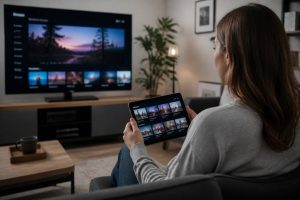
How broadcasters can monetize content across linear tv and web platforms with hybrid distribution and smart ad tech
How broadcasters can monetize content across linear tv and web platforms with hybrid distribution and smart ad tech
For years, the monetization playbook for broadcasters was blissfully simple: sell GRPs on linear, pray for decent overnight ratings, and go to lunch. That world is gone. Audiences now expect to watch the same show on a living‑room TV, a laptop in a hotel, and a phone on the train. Advertisers want the same thing: a single campaign, de‑duplicated reach, consistent reporting across every screen.
The good news? When you treat linear TV and web distribution as one hybrid ecosystem instead of two competing silos, your inventory becomes more valuable, not less. Add smart ad tech to the mix, and you can squeeze a lot more revenue out of every stream, every break, and every impression.
Let’s unpack how broadcasters can turn hybrid distribution into a monetization engine instead of a rights and tech headache.
Why hybrid distribution is now non-negotiable
Linear still matters. In many markets, prime‑time broadcast is unbeatable for reach and brand safety. But three things have fundamentally changed the revenue equation:
- Audience fragmentation: Viewers bounce between cable, CTV apps, mobile, desktop, social clips, FAST channels… often in the same day.
- Advertiser expectations: Media buyers want cross‑platform frequency capping, unified reporting and more deterministic targeting than a broad “Adults 25–54.”
- Data-rich competitors: Streamers and platforms have set the standard for addressable, measurable video ads.
A hybrid distribution strategy acknowledges that “TV” is now both:
- Linear feeds: Over‑the‑air, cable, satellite, IPTV, with fixed schedules.
- IP-based experiences: Live simulcast, catch‑up, VOD libraries, FAST channels and clips across apps and the open web.
The trick is not simply being present on both, but monetizing them as parts of a single, orchestrated inventory pool.
What a hybrid distribution model really looks like
Hybrid distribution is more than “we also have an app.” It’s a coordinated system where content, ad inventory, data and rights are managed across linear and IP platforms together.
At a high level, successful broadcasters tend to share four building blocks:
- Unified content pipeline: One source of truth for assets, versions, subtitles, ad markers, rights windows and metadata that feeds both linear playout and OTT/online delivery.
- Aligned scheduling: Coordinated EPG data and program schedules, with simulcast where it makes sense and digital‑first programming where it doesn’t.
- Integrated ad stack: Ad decisioning and measurement that can recognize the same user or household across linear addressable and IP streams.
- Consistent UX logic: Cohesive ad loads, break patterns and brand rules so viewers feel they’re in the same universe, no matter the device.
Once this foundation is in place, every new distribution surface (a new CTV app, a FAST channel on a third‑party platform) becomes incremental revenue instead of an operational nightmare.
Smart ad tech: the fuel for cross-platform monetization
Hybrid distribution without smart ad tech is just… more streams with the same problems. To unlock serious revenue, broadcasters are leaning on a few key technologies.
1. Server‑Side Ad Insertion (SSAI) for seamless streaming
SSAI stitches ads into the stream before it hits the viewer’s device. Done properly, it:
- Reduces buffering and ad playback issues versus client‑side SDKs.
- Avoids many ad blockers on web and mobile.
- Supports consistent break structures between linear and digital simulcasts.
- Makes CTV and OTT experiences feel more “broadcast‑grade.”
In a hybrid context, SSAI lets you mirror linear ad breaks in a simulcast while still swapping out campaigns for different devices, geographies or audience segments.
2. Dynamic Ad Insertion (DAI) for addressability at scale
DAI is about decisioning: which ad goes to which viewer, in which slot, based on data. For broadcasters, DAI is the bridge between traditional spot sales and digital‑style targeting.
- On linear, DAI increasingly appears as addressable TV, where set‑top boxes or smart TVs can substitute targeted ads within break boundaries.
- On IP streams, DAI is the default: every ad call can be tailored to the user profile, context, and device.
When DAI is coordinated across linear and web, you can offer buyers:
- Household‑level targeting on TV plus person‑level refinement on web & mobile.
- Reach and frequency planning that spans broadcast and streaming.
- Sequential messaging (e.g. awareness spot on linear, product demo on OTT).
3. Data management and clean rooms
Data is where things get delicate. Viewers care about privacy; regulators do too. Broadcasters that win here focus on:
- First‑party data: Logged‑in users, subscription data, loyalty programs, newsletter sign‑ups, and contextual viewing data from EPGs and apps.
- Privacy‑safe matching: Using clean rooms or privacy‑enhancing tech to match broadcaster data with advertiser or retailer data without sharing raw identifiers.
- Consistent IDs: Household IDs or publisher‑owned identifiers that span CTV, mobile and web properties.
The monetization payoff is significant: higher CPMs for addressable campaigns, more attractive audience guarantees, and more resilient targeting in a cookie‑less world.
4. Programmatic pipes for video
Programmatic doesn’t mean handing your premium inventory to the lowest bidder. In a hybrid model, it means using automated pipes to:
- Access demand from multiple DSPs and trading desks for digital inventory.
- Layer programmatic guaranteed deals on top of direct IOs.
- Use header bidding or unified auctions for CTV and web video to maximize yield.
- Run private marketplaces for brand‑safe, high‑CPM video.
When your SSAI/DAI setup plugs into a well‑managed programmatic stack, you can optimize every break in real time, not just once a quarter in a pricing meeting.
Making linear and web work together, not compete
One of the biggest fears inside broadcast organizations is internal cannibalization: “If we push viewers to our app, won’t linear ratings drop?” In practice, smart hybrid monetization strategies tend to increase total revenue by:
- Shifting low‑value impressions from linear to digital where they can be better targeted and priced.
- Extending the life of content with catch‑up and VOD, adding extra ad opportunities beyond the first airing.
- Opening new formats like short‑form highlights, clips and bonus content that don’t fit the linear schedule.
For example, a hit reality show can:
- Air on linear with traditional spot sales and some addressable overlays.
- Simulcast on your CTV app, with SSAI and more granular device targeting.
- Offer next‑day catch‑up with reduced ad loads but higher CPMs due to better targeting.
- Spawn a FAST “behind the scenes” channel, monetized heavily via programmatic demand.
Suddenly, that one show is four monetization surfaces, not just one time slot.
Business models that thrive in a hybrid world
Hybrid distribution opens the door to monetization models that go beyond “sell ads, sell spots, repeat.” A few that are gaining traction:
- AVOD and hybrid SVOD/AVOD: Free or low‑cost tiers supported by targeted ads, using the same shows as linear but with flexible ad loads and formats.
- FAST (Free Ad‑Supported Streaming TV) channels: Themed linear‑style streams built from archive content, news segments or genre‑based programming, distributed across major CTV platforms.
- Digital‑only sponsorships: Branded content, interactive overlays, QR code shoppable ads that live primarily in OTT and web environments.
- Premium upsell: Ad‑free or “reduced ad” versions of popular shows for logged‑in or paying users, still backed by strong sponsorship and product placement.
The trick is packaging these offerings so buyers can understand them in relation to traditional GRP‑based media plans. That often means building cross‑platform bundles that promise:
- Baseline reach on linear.
- Incremental reach and higher engagement on OTT and web.
- Unified reporting dashboards showing cross‑screen performance.
Practical playbook: from theory to implementation
Where to start if your current setup looks more “cable in 2006” than “streaming in 2026”? A phased approach helps avoid blowing up existing revenue while you modernize.
Phase 1 – Clean up the foundations
- Audit your content pipeline: Where do assets live? How are ad markers defined? Can you use SCTE‑35 or equivalent markers consistently across playout and IP?
- Standardize metadata and rights tracking so you know exactly which windows and platforms are monetizable.
- Align teams: linear scheduling, digital product, ad sales and ad ops need shared KPIs, not competing targets.
Phase 2 – Deploy SSAI and unified ad decisioning
- Roll out SSAI for your OTT and CTV experiences to stabilize ad delivery.
- Integrate a central ad decisioning layer (or closely coordinated stack) that can handle both direct deals and programmatic across devices.
- Start mirroring key linear ad breaks in simulcast streams, then layer in digital‑only campaigns.
Phase 3 – Add addressable and data sophistication
- Collaborate with distributors (MVPDs, vMVPDs, TV OEMs) to unlock addressable inventory on linear where possible.
- Invest in first‑party data collection and consent flows across all digital properties.
- Explore clean room partnerships with top advertisers to enable data‑driven deals without compromising privacy.
Phase 4 – Launch hybrid products for the market
- Create integrated packages that include linear spots, OTT impressions and cross‑device frequency management.
- Offer test‑and‑learn pilots for key clients (think big retail, auto, telecom) with clear measurement frameworks.
- Use campaign case studies to refine pricing and positioning across your entire sales organization.
Common pitfalls (and how to dodge them)
Not all hybrid strategies pay off immediately. A few frequent traps are worth calling out.
- Fragmented sales incentives: If your linear and digital sales teams are fighting over credit, hybrid deals will stall. Solve compensation and organizational design early.
- Inconsistent ad loads: Running 16 minutes of ads per hour on linear and 4 minutes on OTT may sound viewer‑friendly… until buyers compare CPMs and ask difficult questions. Align your philosophy and explain it transparently.
- Over‑reliance on open programmatic: Dumping premium CTV and live streams into open auctions tends to push CPMs down and brand safety risks up. Use private marketplaces and curated deals as your default.
- Underestimating ops complexity: SSAI, DAI, creative versioning, targeting rules, and different platform specs can overwhelm teams. Invest in tooling, documentation and process before you chase every shiny new format.
Think of it like upgrading a plane mid‑flight: you can swap in more efficient engines, but you probably shouldn’t rebuild the wings and cockpit on the same day.
Measurement: proving value across screens
Hybrid monetization lives or dies on measurement. Advertisers don’t just want impressions; they want verified, de‑duplicated impact across linear and digital.
Broadcasters are leaning on a mix of:
- Panel plus census approaches: Traditional TV panels augmented with automatic content recognition (ACR) data and digital log‑level impression data.
- Cross‑screen attribution: Tools that connect TV exposure with online outcomes (site visits, app installs, online sales) using privacy‑compliant methodologies.
- Outcome‑based guarantees: Moving beyond GRPs to metrics like incremental reach, brand lift or even sales lift, especially for premium hybrid campaigns.
The more confidently you can prove that a campaign’s combined linear + digital plan outperforms a linear‑only buy, the easier it becomes to shift budgets into your hybrid products.
What’s next: shoppable, interactive and AI-optimized TV
Once the basics of hybrid distribution and smart ad tech are in place, the frontier gets more creative—and, frankly, more fun.
- Shoppable TV: QR codes and clickable overlays on CTV and web that let viewers move from awareness to purchase in a single session.
- Interactive formats: Gamified ad experiences, polls during live events, or branching storylines sponsored by brands across both linear addressable and OTT streams.
- AI‑driven optimization: Machine learning models that predict which inventory mix (linear prime‑time vs. late‑night OTT vs. FAST) will hit an advertiser’s goals at the best yield for you.
- Dynamic creative optimization (DCO): Tens or hundreds of creative variants automatically tailored to time of day, weather, location, or audience segment.
All of these innovations depend on the same foundations: unified content, connected ad tech and a view of the audience that spans linear and web. Without that, they’re just flashy demos.
Broadcasters who embrace hybrid distribution and smart ad tech now are essentially rewriting the rules of “TV” while they still have a strong brand, deep content libraries and trusted relationships with advertisers. Those are powerful assets—especially when every viewer, on every screen, can finally be part of the same, monetizable story.