Global television: how broadcast, tv and web distribution are shaping the future
Global television: how broadcast, tv and web distribution are shaping the future
For decades, television meant one thing: a signal, a screen, and a couch. But “TV” has quietly grown legs, learned to stream, and started traveling everywhere from smart TVs to phones, tablets, game consoles, and browser windows. The modern viewer does not ask, “What channel is it on?” as much as, “Can I watch it now, on this device, without signing my soul over to ten different logins?”
That shift is changing global television at every level. Broadcast, traditional TV distribution, and web delivery are no longer separate worlds. They are overlapping systems that now work together to reach audiences who expect flexibility, quality, and instant access. The result is a media landscape that is more competitive, more technical, and far more interesting than the old “channel 4 at 8 p.m.” era ever was.
So how exactly are broadcast, TV, and web distribution shaping the future of global television? Let’s unpack the moving parts.
Broadcast is no longer the whole story, but it still matters
Broadcast remains a cornerstone of global television. It is efficient, reliable, and still unmatched when it comes to delivering live content at scale. Major events like the Olympics, elections, royal ceremonies, and international sports finals still depend heavily on broadcast infrastructure because it can reach millions of viewers at once with predictable quality.
What has changed is the role broadcast plays in the wider ecosystem. It is no longer the only pipeline; it is one node in a larger distribution strategy. Broadcasters now think in terms of total audience reach, not just linear households. In many markets, over-the-air delivery still serves as the backbone for local news, emergency communications, and free-to-air entertainment, especially where broadband penetration is uneven. In other words, broadcast is still the sturdy old bridge, even if everyone else is also taking the ferry, the subway, and occasionally a slightly questionable scooter.
The strength of broadcast is also evolving through technology. Advances such as ATSC 3.0, hybrid broadcast-broadband workflows, and improved compression standards are helping broadcasters remain relevant. These systems allow for interactive features, targeted advertising, and better video quality, making broadcast less like a one-way street and more like a smart highway with a few extra lanes.
TV distribution is becoming platform distribution
Traditional TV distribution used to be simple in theory, if not in execution. A network delivered content to cable or satellite operators, who then delivered it to homes. That model is still alive, but it is no longer the default center of gravity. Today, television content is increasingly distributed through a mix of linear TV, OTT services, FAST channels, apps, and connected TV platforms.
This is where the definition of “TV” gets a little slippery. Is TV still TV if it arrives through an app on a smart fridge? Probably yes, though perhaps we should all agree to stop pretending the fridge is the main event. The key point is that distribution is now platform-agnostic. Content is packaged once and then optimized for many environments.
For broadcasters and media companies, this means building distribution strategies around audience behavior rather than legacy channel structures. Viewers want:
The challenge is that every platform has different requirements for encoding, metadata, monetization, ad insertion, subtitles, and content rights. A single show might need to be delivered as part of a linear channel, clipped for social promotion, published in a web player, and inserted into a FAST channel schedule. That is not just distribution; that is logistical choreography.
Web delivery is now central, not secondary
There was a time when web video felt like an afterthought: a smaller, lower-quality version of “real TV.” That era is over. Web distribution is now one of the primary ways audiences discover, sample, and consume television content globally.
Web delivery offers advantages that traditional broadcast cannot match on its own. It supports global reach without the need for physical transmission infrastructure in every market. It allows for fast content updates, dynamic metadata, real-time analytics, and direct engagement with viewers. Most importantly, it enables a direct relationship with the audience.
That direct relationship is a game-changer. When a media company controls the player, the app, or the site, it can understand how viewers behave in ways that broadcast alone never could. How long do they watch? Where do they drop off? Which thumbnails convert? Which markets binge a genre nobody saw coming? These insights shape programming decisions, ad sales, and product design.
Web distribution is also where innovation tends to happen first. Adaptive bitrate streaming, low-latency protocols, cloud-based workflows, and server-side ad insertion all became essential because of web-first delivery demands. And once these tools matured, they started flowing back into broader TV distribution strategies.
Global audiences want local relevance
One of the biggest lessons in global television is that worldwide distribution does not mean universal messaging. A show may travel across borders effortlessly, but audiences still want local context, language, and cultural relevance.
This is why localization is now a central strategic function rather than an optional polish step. Subtitles, dubbing, metadata translation, artwork adaptation, and region-specific rights management are all part of modern TV distribution. A comedy that lands in one market because of a cultural reference may need a different promotional hook elsewhere. A news documentary may require local editorial framing. Even the interface matters: recommendations, search results, and menus all influence whether a viewer stays or leaves.
Global platforms have learned that the best way to scale is not to flatten everything into one uniform experience. Instead, they need to build systems that are globally consistent but locally intelligent. That balance is what separates an international media brand from a truly global one.
FAST channels, CTV, and the return of curated viewing
As on-demand libraries grow larger, many viewers are rediscovering the appeal of curated linear experiences. This is one reason FAST, or free ad-supported streaming TV, has exploded in popularity. FAST channels combine the familiarity of traditional TV with the accessibility of streaming. They offer scheduled programming, genre-based discovery, and no subscription barrier.
For viewers, FAST can feel refreshingly easy. Open the app, pick a channel, and watch. No deep search rabbit holes required. For content owners, FAST creates another monetization path and another way to keep catalog content alive.
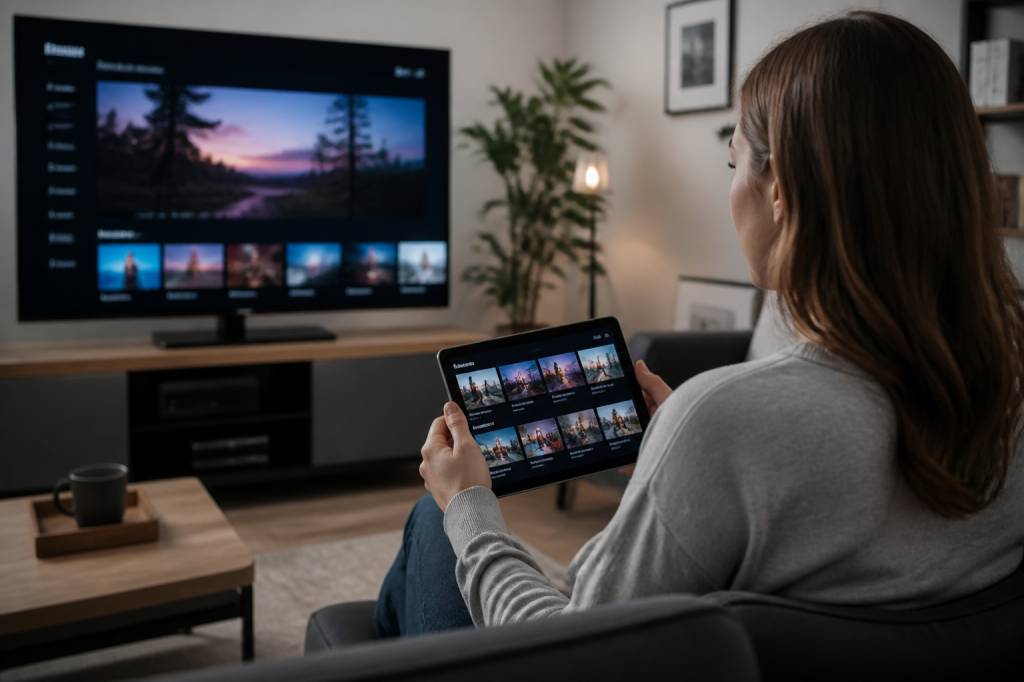
Connected TV, or CTV, is the hardware and software layer that makes much of this possible. Smart TVs, streaming sticks, gaming consoles, and set-top boxes have turned the living room screen into a programmable digital environment. That environment supports live channels, VOD, ads, interactivity, and analytics, all inside the same ecosystem.
This convergence has brought back something broadcast once owned by default: lean-back viewing. Viewers still want the convenience of passive discovery. They just want it with digital flexibility and better targeting. The old TV guide has basically been replaced by a much smarter, much sassier version of itself.
Live events are the stress test for modern distribution
If you want to know whether a distribution stack is actually built for the future, give it a live event. Live sports, breaking news, and major entertainment broadcasts expose every weak point in a workflow. Latency, buffering, rights restrictions, CDN scaling, ad insertion, and failover plans all get tested in real time, under pressure, with millions of viewers waiting.
Broadcast is still a hero here because of its stability and mass reach. But web delivery is increasingly expected to match that reliability while adding interactivity and personalization. Viewers want multiple camera angles, instant highlights, social sharing, and synchronized experiences across devices. They also expect the stream not to collapse at the exact moment the match goes into extra time. A tall order, but that is the new baseline.
To deliver live content globally, media companies are combining traditional broadcast feeds with cloud production, edge delivery, and intelligent caching. Hybrid workflows allow content to be produced in one location and distributed across multiple channels simultaneously. This not only improves scale, but also opens the door to more flexible business models.
Technology is reshaping monetization as much as distribution
Distribution is never just about moving bits. It is also about how those bits become revenue. The future of global television depends on monetization models that can adapt to fragmented audiences and varied device environments.
Subscription video on demand, advertising-supported streaming, transactional models, licensing, and hybrid bundles all coexist now. The winning formula often depends on the market. In some regions, subscriptions dominate. In others, ad-supported access is more realistic. In many cases, a blended approach works best.
Advanced ad tech is especially important. Server-side ad insertion, dynamic ad targeting, and programmatic sales make it possible to monetize audiences across broadcast-like streams and web-based delivery. But this also introduces operational complexity. Rights windows, ad pod rules, brand safety requirements, and measurement standards all need to line up across platforms.
And then there is data. Lots of it. Media companies now use analytics to inform content commissioning, schedule planning, user experience, and ad performance. The irony is delicious: television, once the most broadcast-one-way medium imaginable, has become one of the most data-driven media businesses on the planet.
Artificial intelligence is accelerating the next phase
AI is quickly becoming a practical tool in global television distribution, not just a buzzword sprinkled into pitch decks like confetti at a very technical parade. It is already being used for content tagging, speech-to-text transcription, translation, quality control, highlight generation, and audience segmentation.
For broadcast and web teams, AI can help reduce the time between content creation and publication. A live sports clip can be identified, trimmed, captioned, and published faster than ever. Metadata can be enriched automatically. Localization workflows can be accelerated. Recommendation engines can become more precise.
Of course, AI is not magic. It still needs human oversight, especially when editorial standards, compliance, and cultural nuance are involved. A machine may detect a goal, but it does not always understand why that goal mattered to three continents and a studio full of people shouting in five languages.
Still, the direction is clear: AI will help media companies manage the scale and speed of global distribution more efficiently. That matters because content volume is only going one way, and it is not down.
The future belongs to flexible distribution systems
The real story of global television is not that one distribution method is replacing another. It is that broadcast, TV, and web are merging into a flexible system designed around audience reach, product agility, and monetization efficiency.
The most successful media companies will be the ones that can:
That last point matters. Technology should improve the audience experience, not overwhelm it. Viewers do not care how elegant the backend architecture is if the stream freezes during the final five minutes or the captions are a small existential crisis.
What they do care about is access, quality, relevance, and convenience. The companies that deliver those things consistently will define the next era of television.
Global television is no longer just about reaching households. It is about meeting viewers wherever they are, on whatever screen they choose, with content that feels immediate, local, and worth their time. Broadcast keeps the foundation strong. TV distribution keeps the system scalable. Web delivery keeps it agile. Together, they are building a future where television is less of a channel and more of an ecosystem.