Global tv broadcasting trends and streaming solutions for 2026
Global tv broadcasting trends and streaming solutions for 2026
The global TV landscape in 2026: less “channel surfing,” more intelligent delivery
Television in 2026 is no longer just a linear feed arriving on a single screen at a fixed time. It is a layered ecosystem: live channels, FAST services, cloud playout, OTT apps, connected TV platforms, and broadcast infrastructure that increasingly behaves like software. If that sounds like the industry finally admitted it was living in a multiverse, well, yes—that’s pretty close.
What’s driving this shift? Audience habits are still fragmenting, but not in a chaotic way. Viewers expect instant access, high-quality playback, personalized discovery, and the freedom to jump between devices without thinking twice. Broadcasters, meanwhile, are under pressure to reduce operational costs, scale internationally, and keep latency low enough that live sports and news still feel, well, live.
In 2026, the winning strategy is no longer “broadcast versus streaming.” It is “how do we use both intelligently?” The strongest global players are building hybrid distribution models, investing in flexible streaming architectures, and using data to make programming, monetization, and delivery smarter at every stage.
Hybrid delivery is becoming the default, not the backup plan
For years, broadcasters treated streaming like the younger sibling who borrowed the car keys. In 2026, that dynamic is gone. Hybrid distribution is now the practical norm for global TV operations, especially for networks serving both traditional households and digital-first viewers.
Linear broadcast still matters for mass reach, reliability, and major live events. But streaming adds what broadcast alone cannot: targeted monetization, on-demand libraries, multi-device access, and detailed audience analytics. The most effective media companies are combining satellite, terrestrial, cable, IPTV, and OTT into one coordinated delivery strategy.
This approach is particularly important in regions where infrastructure and viewing habits differ dramatically. A broadcaster may rely on terrestrial transmission in one market, mobile-first streaming in another, and FAST distribution through smart TV ecosystems elsewhere. The trick is to build a workflow that treats those paths as complementary, not competing.
- Broadcast remains essential for reach, resilience, and live-event scale.
- Streaming enables personalization, interactivity, and deeper viewer data.
- Hybrid delivery reduces dependence on a single distribution channel.
- Centralized content operations improve consistency across markets.
FAST channels are still rising, but the market is getting smarter
Free Ad-Supported Streaming TV has become one of the most significant distribution trends of the decade. In 2026, FAST is no longer the novelty aisle of digital TV. It is a core part of the monetization strategy for broadcasters, studios, and niche content brands alike.
The appeal is obvious. FAST offers viewers linear-like simplicity with on-demand convenience nearby, while content owners benefit from an additional revenue stream without the friction of subscription fatigue. For audiences overwhelmed by too many paid services, free content with curated channels feels refreshingly straightforward.
But the market is maturing. The era of launching dozens of loosely programmed channels and hoping for ad dollars to appear like a surprise cameo is fading. In 2026, successful FAST services are focusing on tighter curation, clearer audience segmentation, and smarter ad insertion. That means better programming logic, stronger metadata, and improved user experience across smart TVs and connected devices.
We’re also seeing broadcasters use FAST as a discovery layer. It can serve as the front door to a wider content ecosystem, driving viewers toward premium subscriptions, live events, or on-demand libraries. Think of it as the opening scene that gets viewers to stay for the rest of the season.
Cloud playout and remote production are moving from optional to operational
Cloud-based infrastructure is no longer just an efficiency project; it is becoming a strategic operating model. By 2026, more broadcasters are adopting cloud playout, cloud editing, remote contribution, and distributed production tools to support faster launches and more flexible workflows.
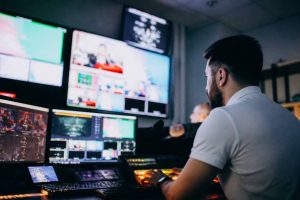
Why the acceleration? Because global media operations are messy. One day you’re managing a sports feed from three continents, the next you’re launching a pop-up channel for a major event, and somehow the master control team still needs lunch. Cloud workflows help solve this by decoupling operations from physical facilities.
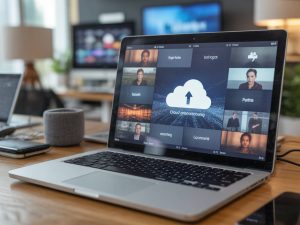
Cloud playout allows broadcasters to launch channels faster, scale into new markets with less hardware, and update schedules without the usual amount of logistical pain. Remote production tools reduce travel and studio overhead while making it easier to collaborate across time zones. For international broadcasters, this flexibility is a major competitive advantage.
Still, the cloud is not magic. It works best when paired with disciplined architecture, resilient connectivity, and strong governance around latency, redundancy, and security. Companies that treat cloud adoption as a simple lift-and-shift often discover that complexity just moved somewhere else—usually into a spreadsheet with too many tabs.
Low latency is now a business requirement, not a technical trophy
Live content remains one of the strongest reasons people still gather around screens in real time. Sports, breaking news, awards shows, and major entertainment events depend on immediacy. But in a world where viewers can receive social media updates before the video catches up, latency is no longer a small technical issue. It is a user-experience issue, a rights issue, and sometimes a monetization issue.
By 2026, broadcasters and streamers are increasingly prioritizing ultra-low-latency delivery for live events. The goal is to reduce the delay between the actual event and what the audience sees on screen, minimizing spoilers, chat-room chaos, and the awkward moment when your neighbor’s reaction gives away the goal before your feed does.
Solutions include optimized encoder settings, more efficient delivery protocols, better edge caching, and adaptive streaming tuned for live use cases. For premium events, some operators are even designing delivery tiers that balance low latency with broad compatibility across devices and networks.
What matters most is selecting the right latency target for each type of content. A live concert may tolerate a few extra seconds. A gambling feed, sports broadcast, or election-night coverage cannot. The best platforms in 2026 are segmenting use cases instead of forcing every stream into the same pipeline.
AI is reshaping content operations, but not replacing editorial judgment
Artificial intelligence is now embedded in much of the broadcasting and streaming workflow, from content tagging to quality control to audience recommendation. In 2026, AI is less about futuristic hype and more about making media operations less repetitive and more scalable.
For broadcasters managing large catalogs, AI-assisted metadata generation can dramatically improve searchability and content discovery. Automatic scene detection, translation support, captioning, and rights classification are also becoming more reliable. These tools save time, reduce manual work, and help content travel across borders with less friction.
At the same time, editorial oversight remains essential. AI can suggest, classify, and prioritize, but it should not be left alone in the control room like a teenager with a new playlist and too much confidence. Human teams still need to validate context, tone, cultural sensitivity, and brand alignment.
The most effective strategy is a hybrid one: use AI to accelerate operations, but keep humans in charge of judgment, storytelling, and editorial nuance. That balance is especially important for global broadcasters working across multiple languages and markets where context matters as much as speed.
Personalization is becoming the new prime time
In traditional broadcasting, prime time was a shared appointment. In streaming, prime time is increasingly personalized. By 2026, viewers expect platforms to understand not just what they watched, but what they might want next, when they prefer to watch, and which device they use at different moments of the day.
This shift is changing everything from content discovery to ad targeting. Recommendation engines are getting better at surfacing relevant content, while broadcasters are using viewer data to refine channel lineups, promotional spots, and regional programming decisions. For audiences, this means less scrolling and fewer dead ends. For operators, it means better retention and potentially stronger ad performance.
However, personalization has a trust problem if it becomes too opaque. Viewers want relevance, not the feeling that an algorithm has become their new overbearing roommate. Transparency, control, and clear content curation remain important. Platforms that explain recommendations and offer user controls will likely earn stronger loyalty.
In the broadcasting world, personalization also extends to content packaging. Different regions, languages, and viewing habits may require distinct channel mixes, thumbnails, playlists, or promotional strategies. Localization is no longer just subtitles and dubbing. It is an experience design challenge.
Monetization is diversifying beyond subscriptions and basic ads
One of the biggest lessons from the last few years is that a single monetization model is rarely enough. In 2026, broadcasters and streaming providers are experimenting with mixed revenue strategies that include subscription tiers, advertising, sponsorships, transactional access, FAST, bundled offerings, and event-based pay-per-view.
This diversification is especially important in markets where consumer spending is under pressure or where subscription fatigue has peaked. Viewers may not be willing to pay for ten different services, but they will often engage with a free channel, accept limited ads, or pay for premium live events they really care about.
Broadcasters are also becoming more sophisticated in how they sell inventory. Dynamic ad insertion, addressable advertising, and contextual targeting allow them to offer advertisers more precise value. At the same time, content owners are testing packaging strategies that align pricing with audience segments instead of using one-size-fits-all models.
- Hybrid subscription and ad-supported tiers help reduce churn.
- FAST channels create reach and additional inventory.
- Event-based monetization works well for premium live content.
- Bundling can improve perceived value and simplify acquisition.
Device fragmentation is still a headache, just a more advanced one
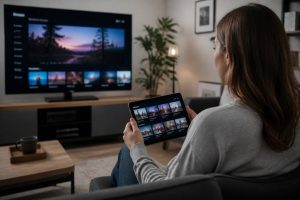
Streaming may be everywhere, but the device landscape is still wildly inconsistent. Smart TVs, set-top boxes, mobile devices, gaming consoles, browsers, and streaming sticks each behave a little differently. In 2026, delivering a consistent user experience across them all remains one of the industry’s most persistent challenges.
That challenge is not just technical. It affects onboarding, interface design, app performance, ad delivery, and content rights. A service that looks elegant on one platform can feel clunky on another if the interface, playback engine, or metadata handling is not optimized properly.
Broadcasters and streaming providers are increasingly investing in cross-platform testing, device-specific UX tuning, and modular app frameworks. The goal is to reduce friction at every point of entry. Because if a viewer spends three minutes trying to log in and another two deciding whether the app is worth the effort, the remote is probably already drifting toward another service.
For global operators, device strategy now includes regional hardware patterns as well. In some countries, smart TVs dominate. In others, mobile-first viewing is the norm. A successful streaming solution has to respect those realities rather than assuming one device hierarchy fits every market.
Security, rights, and compliance are taking center stage
As content distribution becomes more complex, so do the risks. In 2026, secure delivery is not just an IT concern. It is central to content protection, audience trust, and revenue integrity. Broadcasters must defend against piracy, credential sharing, stream hijacking, and compliance failures across multiple territories.
Rights management is especially important in global operations. A program licensed for one region may not be available in another, and live-event rights often come with strict timing or device restrictions. Automation helps, but only if metadata and rights information are accurate from the start.
Security strategies increasingly include encryption, watermarking, forensic tracking, secure authentication, and centralized rights enforcement. Compliance systems also need to account for data privacy laws, advertising regulations, accessibility requirements, and local content rules. That’s a lot of boxes to tick, but in digital broadcasting, missing one can get expensive very fast.
The broadcasters that succeed will be those that embed compliance and security into the workflow early, rather than treating them as last-minute fixes. In 2026, trust is part of the product.
What streaming solutions should broadcasters prioritize in 2026?
With so many moving parts, it helps to focus on solutions that create flexibility rather than lock-in. The most future-ready platforms are built around interoperability, automation, and modularity. They let broadcasters evolve without rebuilding everything from scratch every time the market shifts.
Key priorities include scalable cloud infrastructure, reliable live encoding, metadata-driven content workflows, multi-CDN delivery, and analytics that actually inform decisions instead of simply generating impressive-looking charts for meetings no one enjoys.
Broadcasters should also look for solutions that support:
- Multi-region distribution with localized workflows.
- Low-latency live delivery for sports and news.
- FAST channel creation and management.
- Advanced content monetization and ad insertion.
- Cross-platform playback optimization.
- Automated metadata and workflow intelligence.
- Built-in security, rights, and compliance controls.
The best solutions do not force media companies into a single operating model. They support experimentation, whether that means launching a new channel, entering a new territory, or testing a new monetization format without risking the entire stack.
The broadcasters that win will think like platforms, not just programmers
By 2026, the difference between a broadcaster and a digital media platform is thinner than ever. The most successful companies will not simply schedule content and push it out. They will manage ecosystems: content, data, monetization, distribution, and user experience working together in real time.
This is where strategy becomes more important than technology alone. The tools are increasingly available to everyone. The differentiator is how well they are deployed, integrated, and adapted to local market realities. A smart broadcaster knows when to lean on linear reach, when to amplify through streaming, and when to let data guide the next move.
And that, ultimately, is the big story of global TV broadcasting in 2026. It is not about choosing one path. It is about orchestrating many paths into a coherent, flexible, audience-first operation. The future of TV is not less television. It is television that finally learned how to move at internet speed without losing its sense of occasion.