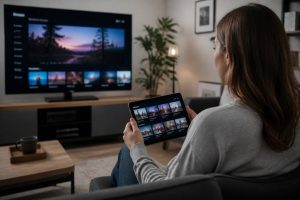
Global t v broadcasting trends and streaming strategies
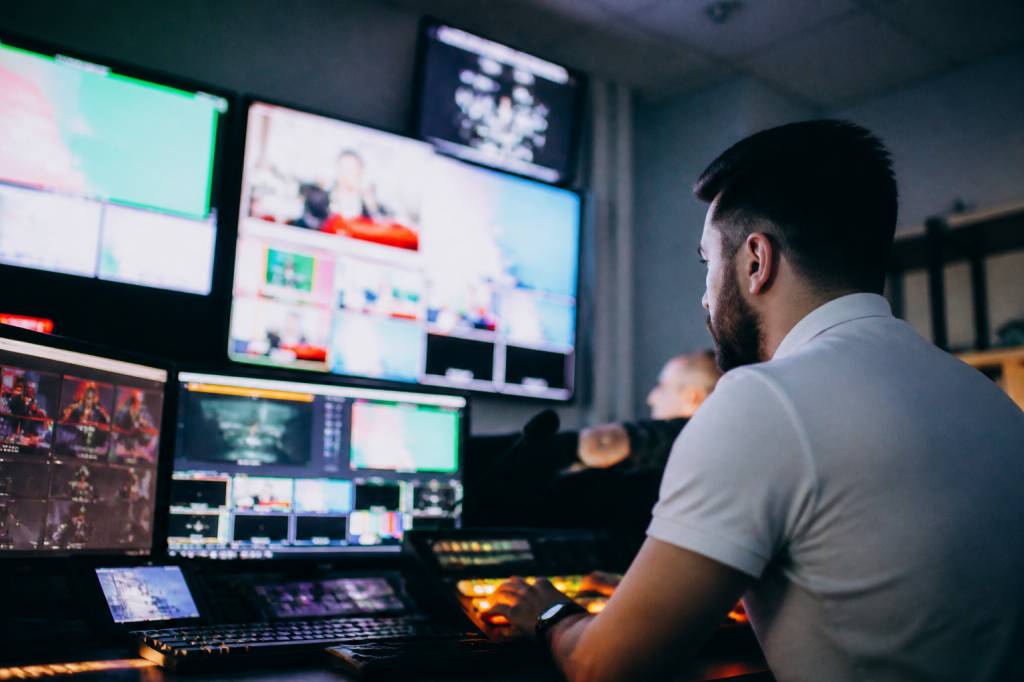
Global t v broadcasting trends and streaming strategies
Global television broadcasting is no longer just about sending a signal from a studio to a screen. It’s a moving target shaped by streaming habits, regional regulations, device ecosystems, and audience expectations that change faster than a season finale spoiler on social media. For broadcasters, platforms, and media brands, the real challenge is not simply reaching viewers—it’s reaching them in the right format, on the right device, at the right time, without making the experience feel like homework.
That’s where the current wave of global TV broadcasting trends and streaming strategies gets interesting. The industry is in the middle of a hybrid era: traditional broadcast remains essential, but streaming is now the front door for millions of viewers. The winners are the organizations that can blend both worlds without making the viewer choose between “old TV” and “new TV” as if they were two rival factions in a sci-fi saga.
The shift from channel-first to audience-first
For decades, broadcasters thought in terms of channels, schedules, and territories. Viewers adapted to the lineup. Today, the relationship has flipped. Audiences expect content to follow them across devices, time zones, and moods. They may start a live sports event on a smart TV, continue highlights on a phone during a commute, and watch a replay later on a laptop. The channel still matters, but the audience journey matters more.
This audience-first mindset is driving several major changes in broadcasting strategy:
- More personalized content discovery through recommendation engines and curated rails.
- Flexible access models, including free ad-supported streaming, subscription bundles, and hybrid tiers.
- Device-agnostic delivery designed for smart TVs, mobile apps, web players, and connected devices.
- Localized experiences that adapt language, metadata, ads, and even content rights by region.
The point is simple: if your service behaves like a rigid broadcast schedule trapped in a digital wrapper, audiences will notice—and they will leave faster than a buffering wheel on a bad hotel Wi-Fi connection.
Global broadcasting is becoming increasingly hybrid
One of the most important trends in global TV broadcasting is the rise of hybrid distribution. Broadcasters are no longer choosing between linear and streaming; they are combining both. Linear channels still deliver mass reach, especially for live news, sports, and major entertainment events. Streaming, meanwhile, offers flexibility, interactivity, and deeper audience data.
This hybrid model is especially powerful in global markets where viewing behavior varies widely. In some regions, linear TV remains the dominant household experience. In others, mobile-first streaming is the default. A well-designed strategy can support both without duplicating everything from scratch.
Think of it like a well-run newsroom that also happens to know how to go viral. The broadcast feed handles the big moment. Streaming extends the life of the content with clips, catch-up, highlights, and on-demand access. The two formats reinforce each other instead of competing.
Live streaming is the new prime time
Live content continues to be one of the strongest reasons people tune in at the same time. Sports, breaking news, award shows, political events, and live entertainment remain high-value programming because they create urgency. If viewers feel they must watch now or miss out, engagement rises.
But live streaming introduces technical pressure that broadcast teams know all too well. Latency, stream stability, CDN performance, and synchronization across devices are no longer back-end concerns. They directly shape the viewer experience. A few seconds of delay can ruin social engagement around a live event, especially when one viewer’s phone spoils the result before another viewer’s stream catches up.
Broadcast and streaming teams are responding with strategies such as:
- Low-latency protocols for near-real-time delivery.
- Redundant encoding and distribution paths for reliability.
- Scalable cloud infrastructure for sudden audience spikes.
- Real-time monitoring and automated alerting to catch issues before they spread.
For global events, these measures are not luxury upgrades. They are table stakes. No one wants a headline event to feel like a tech demo gone wrong.
FAST channels are changing viewer expectations
Free Ad-Supported Streaming TV, better known as FAST, has become one of the most visible shifts in the streaming landscape. FAST channels recreate the lean-back experience of traditional television while offering the convenience of digital delivery. Viewers can browse, click, and watch without the commitment of a subscription. For content owners, FAST creates a new monetization path for library content and niche programming.
Why has FAST grown so quickly? Because it solves several problems at once. It gives viewers a low-friction way to discover content. It gives advertisers inventory in a streaming environment. And it gives broadcasters a way to repurpose assets that might otherwise sit unused in the vault, quietly gathering digital dust like an old DVD box set no one wants to admit they still own.
Successful FAST strategies tend to focus on:
- Clear channel positioning and genre consistency.
- Strong metadata to improve discoverability.
- Ad experience that feels integrated rather than disruptive.
- Regular programming refreshes to prevent viewer fatigue.
The best FAST channels do not feel like a second-class option. They feel intentional, curated, and easy to sample.
Localization is no longer optional
In global TV broadcasting, one-size-fits-all content is becoming harder to defend. Audiences want experiences that feel native to their market. That means more than subtitles and translated menus. It includes regional content preferences, culturally relevant thumbnails, local payment methods, language-specific voiceovers, and ad inventory suited to the market.
Localization is also tied to compliance. Content rights differ by territory, and so do regulations around advertising, age ratings, data usage, and distribution. A successful global streaming strategy must account for these variables from day one. Retroactively sorting out rights or compliance after launch is the media equivalent of building a plane and then realizing the runway is in another country.
Practical localization often includes:
- Multi-language UI and metadata workflows.
- Territory-aware content availability rules.
- Local marketing campaigns with familiar talent or references.
- Flexible payment options aligned with regional user behavior.
Localization done well can dramatically increase retention. Viewers are more likely to stay when the service feels designed for them, not just translated at them.
Data is driving smarter programming decisions
Broadcasters have always relied on ratings, but streaming has expanded the data toolkit enormously. Now teams can see where viewers start, stop, pause, binge, rewind, and abandon content. They can measure device usage, peak times, session length, and content drop-off with a precision that would have sounded like science fiction not too long ago.
The real advantage lies in how that data is used. It can inform commissioning decisions, scheduling strategy, ad placement, and UX design. If audiences consistently abandon a show after the opening ten minutes, that may say something about pacing. If a regional audience strongly prefers short-form recaps over full episodes, that’s a content packaging insight. If connected TV viewers behave differently from mobile users, the platform should probably stop treating them as the same person wearing different screen sizes.
Smart broadcasters are using data to answer questions like:
- Which content drives first-time sign-ups?
- What keeps subscribers engaged over time?
- Which formats perform best in which markets?
- Where do viewers drop out during a live event?
Data is useful, but only if it leads to action. Otherwise it becomes a very expensive way to confirm that people, in fact, have opinions.
Ad-supported models are getting more sophisticated
Advertising remains central to global broadcasting economics, but the approach has changed. In the old model, advertisers bought broad reach and accepted less precision. In streaming, they expect better targeting, more measurable performance, and flexible formats. That includes dynamic ad insertion, audience segmentation, and context-aware placements.
At the same time, broadcasters must protect the viewing experience. Too many ads, poorly timed breaks, or repetitive creative can trigger frustration. The challenge is balancing monetization with retention. If ad load becomes too aggressive, viewers bounce. If it becomes too timid, revenue suffers. This is not unlike trying to season a dish while your entire audience watches the cooking livestream.
What works best today is a layered ad strategy:
- Use first-party data where possible to improve targeting.
- Optimize ad frequency to reduce fatigue.
- Tailor ad formats for live, VOD, FAST, and catch-up environments.
- Maintain brand safety and transparency for advertisers.
Broadcasters that treat ads as part of the product experience, not just a revenue bolt-on, tend to perform better over time.
Cloud workflows are making operations more flexible
Another major trend is the move toward cloud-based production and distribution. Cloud workflows help broadcasters scale faster, collaborate across geographies, and reduce dependence on fixed infrastructure. They also support remote production, which has become a normal part of the media landscape rather than a temporary workaround.
Cloud-based systems are especially useful for global operations because they simplify content routing, asset management, and multi-market delivery. Teams can ingest, transcode, package, and distribute content through a unified environment. That reduces friction and speeds up launch cycles.
Of course, cloud adoption is not a magic wand. It brings its own challenges around latency, vendor integration, security, and cost management. But when implemented well, it enables broadcasters to move faster without sacrificing reliability. In a market where launch timing and adaptability matter, that flexibility is valuable.
Viewer experience is now a competitive advantage
For global broadcasters and streaming platforms, the interface is no longer just a wrapper around content. It is part of the content experience. Navigation, search, playback stability, resume behavior, recommendations, and accessibility all shape whether a viewer stays or leaves.
A polished experience should feel invisible. The user should not have to think about finding the next episode, adjusting volume across devices, or wondering why the app forgot where they stopped. Smooth UX is not glamorous, but it is powerful. It reduces churn, increases watch time, and builds trust.
Accessibility is also increasingly important. Captions, audio descriptions, scalable text, and contrast-friendly design are no longer niche requirements. They are part of making content broadly usable across global audiences. And from a business standpoint, accessibility is both the right thing to do and a smart growth strategy. Nice when ethics and economics agree for once.
What successful streaming strategies have in common
Despite all the complexity, the most effective global streaming strategies tend to share a few core principles. They are not built around hype. They are built around clarity, flexibility, and audience relevance.
- They support both live and on-demand consumption.
- They are designed for multi-device delivery from the start.
- They account for regional rights and localization early.
- They use data to guide content, UX, and monetization decisions.
- They treat broadcast and streaming as complementary, not competing, formats.
There is no single blueprint that works everywhere, but there is a common mindset: build for the viewer, not for the org chart. The audience does not care which department owns the workflow. They care whether the stream plays, the content feels relevant, and the experience is worth coming back to.
Looking ahead to the next phase of global TV
The next chapter in global broadcasting will likely be shaped by deeper personalization, more automation, better monetization tools, and even tighter integration between broadcast and digital ecosystems. Artificial intelligence will continue to improve metadata generation, highlight clipping, translation, and content discovery. Interactivity will expand. Live commerce, second-screen engagement, and audience participation will become more common in certain formats and markets.
Still, the fundamentals will remain the same. Audiences want great content, easy access, and a trustworthy experience. The technology may evolve, but the mission does not: deliver stories and live moments to people everywhere in ways that feel immediate, relevant, and effortless.
That may sound ambitious, but it is also what makes this industry so compelling. Global TV broadcasting is not disappearing; it is transforming into something more dynamic, more data-driven, and more audience-centric than ever. And honestly, that’s a pretty good plot twist.